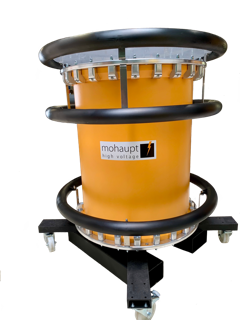
PARALLEL COMPENSATION REACTORS
NATURAL COOLING
APPLICATION
If you need to extend the load capacity of your existing AC test system, PCR is the solution.
Suitable for long-term testing of high-capacitive test objects like power cables, capacitors or other capacitve test objects.
Mohaupt Parallel Compensation Reactors (PCR) are turn-key solutions designed on request and optimized according to your available feeder system.
Mohaupt PCR enable you to substantially extend the capacity of your existing AC test system, whether it is a conventional test transformer or resonant test systems.
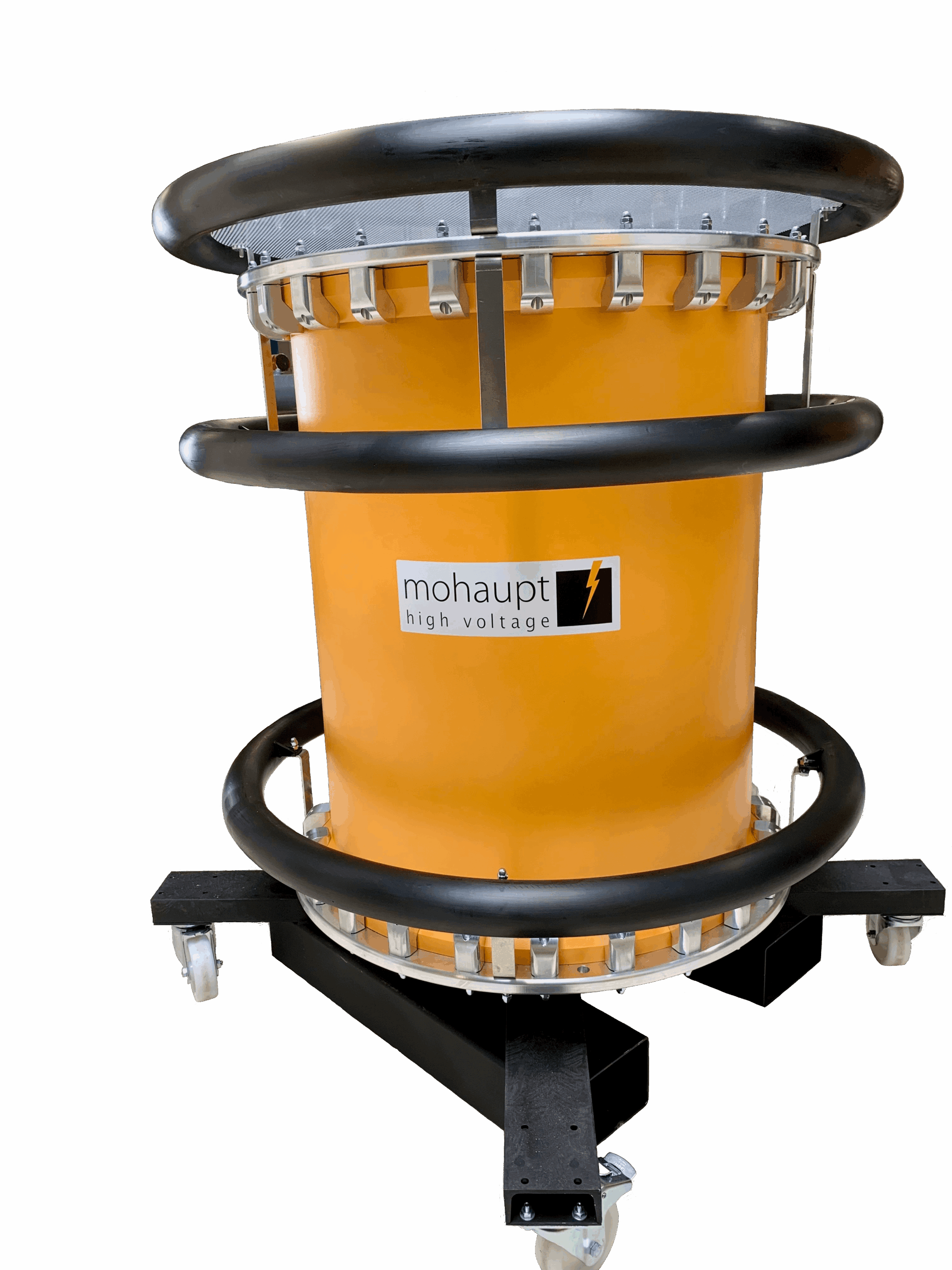
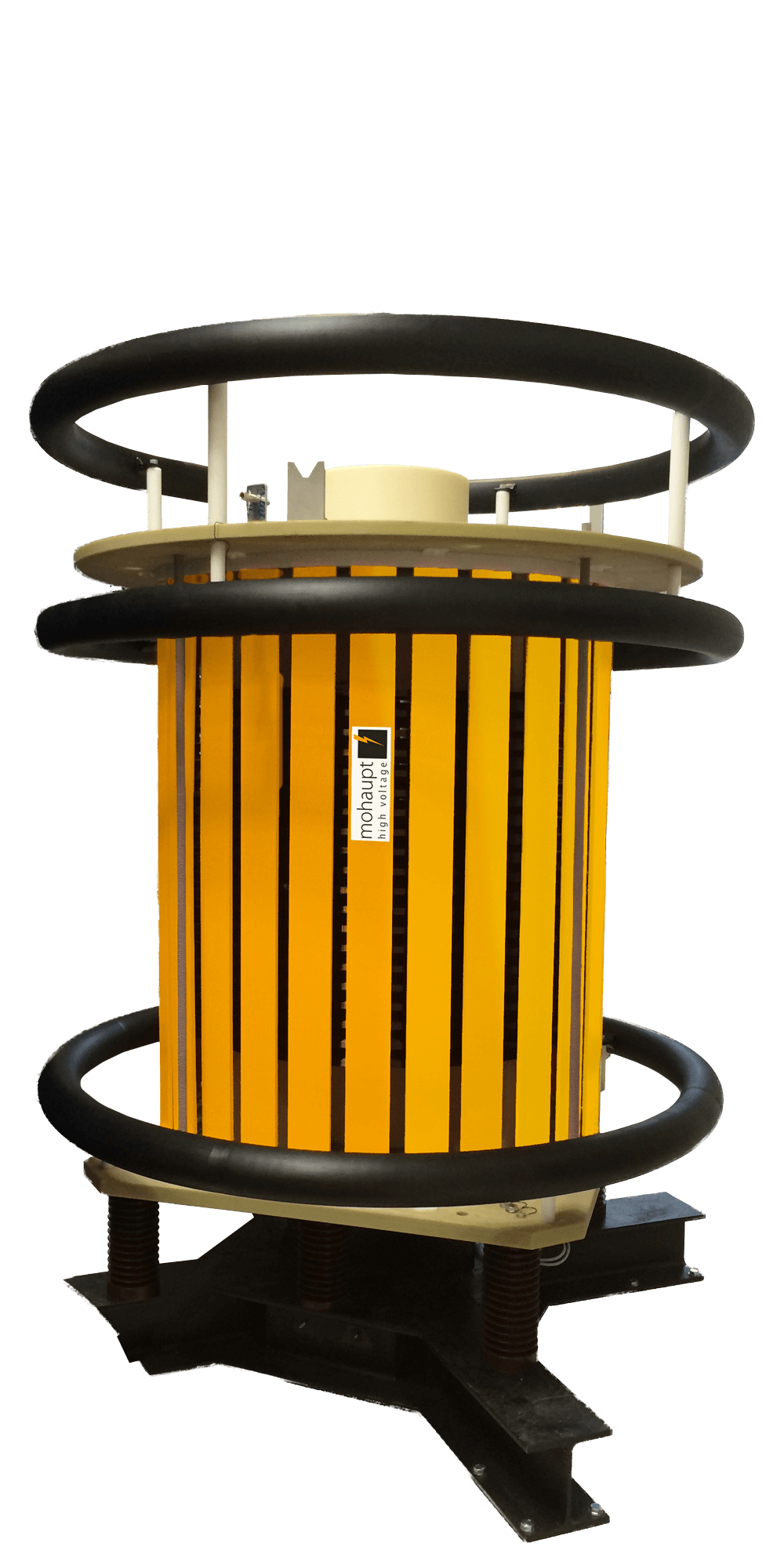
Furthermore PCR type AN are very robust and environmental friendly as being air insulated and air cooled.
No external cooling is required.
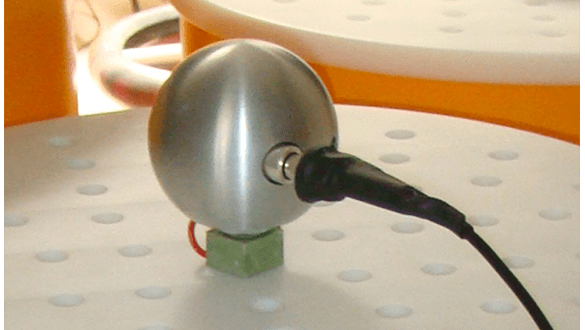
Easy connection and disconnection by Multi-Contact
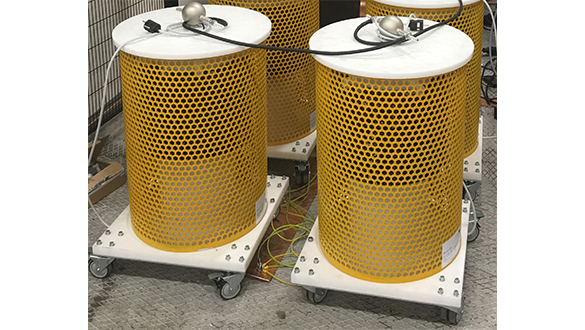
Open design for air cooding, easy handing by swivel castors
PCR 90-12-50, 90kV, 12A, 420nF
OVERVIEW
BENEFITS
- Due to the low-loss design and high Q-values of the PCR (well above 100 for power frequencies), the existing feeder provides a significant load range extension
- Most economic solution for capacity extension
- Robust design electrically, thermally and mechanically
- Due to modularity very flexible adaption to the specific testing situation
- Environmental friendly due to air insulation
- Mobile or fix installations
TECHNICAL DATA
TECHNOLOGY
The key to expand the load capacity as much as possible without modification of the existing feeder system is, to use reactors of low loss design. Conventional reactors do have an iron core. The iron core generates additional losses in addition to the copper losses of the wire. This drawback is overcome by MHVs ironless design. The reactors consist of “air” windings (even though oil insulated). These windings provide excellent electrical performance in steady state operation, as well as in transient conditions (flash over or breakdown of test objects). Furthermore, they have substantial better cooling performance compared to conventional reactor windings, enabling currents up to 5A per reactor without any thermal restriction and subsequent accelerated aging, due to thermal heating of the insulation.